

How cold is 'cold'? - January 6th 2013
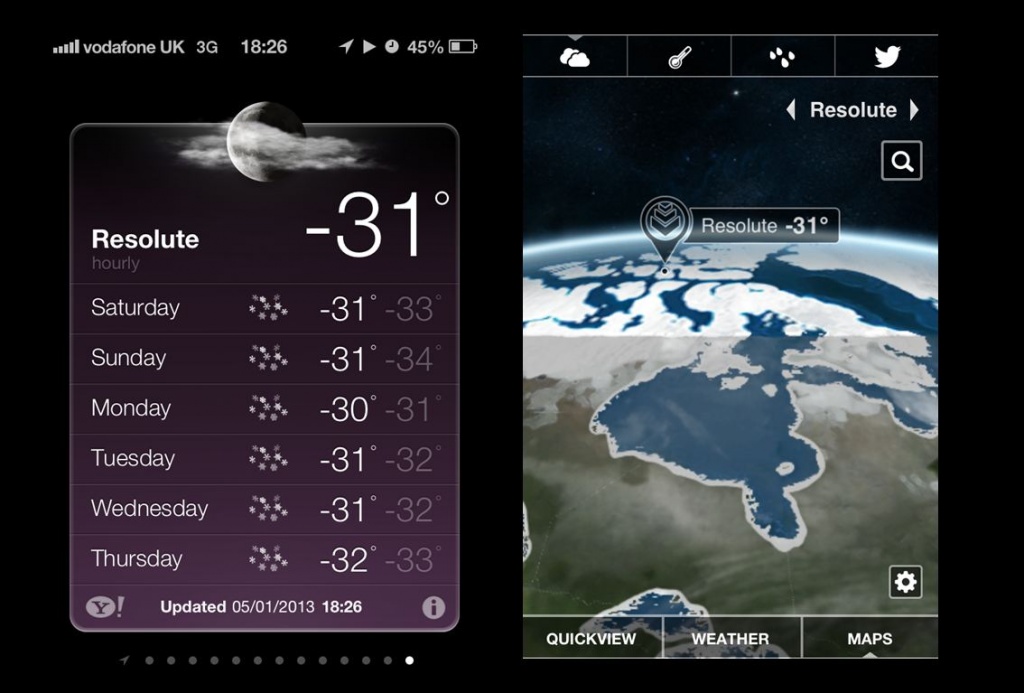
One of the most common questions people ask me is 'how cold will it be at the North Pole?', to which I normally reply 'could be anything from -25c to -55c... and with windchill, perhaps as low as -80c'. Whilst normally looking utterly baffled by this, some people say 'well, once it's below -10c it all feels the same right?'. No. No it doesn't.
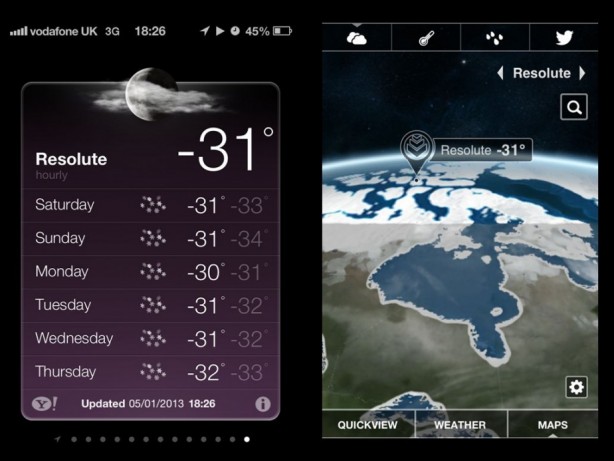
I checked the temperature of my start point in Resolute Bay (Northern Canada) and at the moment it is a balmy -31c (-24f), with windchill bringing it down to a little chillier -44c. That is a little warmer than average for this time of year. 600km to the north (where I am heading)... it is of course colder still.
Very few people have experienced extreme cold (below -30c) and I include myself in this having only been down to that temperature myself on a few occasions. What I can say definitively can say is that -50c will feel substantially different to -10c! It is after all the same temperature difference as 40c and 0c. Extreme cold presents a huge risk and I am learning that the science behind it, and the impact on humans isn't as simple as it might sound...
When 'cold' means dying, or losing bits of body
Unsurprisingly, extreme cold can kill you. Humans evolved on the plains of Africa and are primarily adapted to deal with heat extremeties, not cold. Whilst there are a number of adaptations to the cold (e.g. shivvering), if your body temperature drops siginificantly below 37c you will die - it is as simple as that. Even dropping 2.5c below your core body temperate results in a loss in dexterity, impaired muscle function and drop in mental ability. Dropping to below 26c for any period of time will almost certainly mean death. However, given the body's ability to protect the core, frostbite is a much more common danger.
As blood is bumped away from your extremities to protect your vital organs, the extremities will start to cool. This will result initially in 'frostnip', which is essentially a superficial freezing of the skin and then 'frostbite' where the tissue cells fully freeze and die. This is what causes fingers, toes, feet, noses etc to become blackened and need to be amputated... For a great account of a human story, check out my good mate Nigel Vardy's site at www.mrfrostbite.com.
Why wind makes it even colder
As a biological organism, the ambient air temperature is only part of the story. Wind plays a huge role in impacting your ability to retain heat (which at the end of the day is the most important thing to consider). The body essentially creates an insulating boundary of warm air around it, but as that air is disrupted (e.g. by wind replacing it with colder air), the rate of heat loss through convection increases and it feels colder. Obviously, the faster the wind, the greater the rate of surface cooling and heat loss. So, whilst also needing to worry about the ambient air temperature (potentially -55c) I also need to worry about the wind chill factor. If there is a wind of 50kph (not unusual for the arctic) the temperature will actually feel like -80c.
So how cold is 'cold'?
Let's assume an ambient temperature of -50c (baring in mind it will likely be colder with windchill!), a 'reasonable' (i.e. high street clothing) amount of clothes on, that you are static and taking no remedial action:
- You will probably die from hypothermia in less than 15m
- Should you get wet, you can reduce that to <5 minutes
- You will develop frostbite in less than 2 minutes on exposed skin
- Boiling water will freeze before it hits the ground (don't believe me... check this out)
- Plastics will become brittle and snap
- Your skin will freeze against metal (bad story: a few years back, a guy was trying to unfreeze some tent poles by putting his lips on them. He removed the poles and is lips came off with them. He was airlifted out of there)
How to stay alive
The only three sources of heat are 1) Yourself 2) Other people/animals and 3) Your gas cooker (tent only). So the challenge is to both generate heat (through exersion) and retain this heat (avoid heat loss). Clearly clothing is the most critical factor here - we have very specialist kit which should, in theory, keep us safe and 'warm'. That said, if you lose your gloves, you may well just lose your hands (if not taking remedial action).
Even with all the kit and training, it is extremely cold and dangerous. It's not something I can really prepare for and naturally adds to the nervousness about being in that temperature for 6 weeks...
Updates
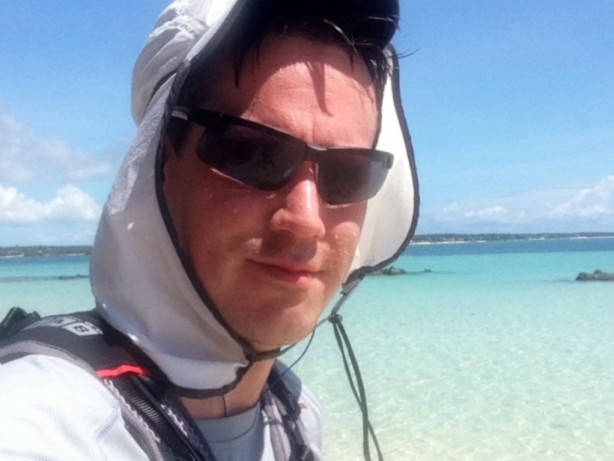
Sand running and volcano climbing - November 29th, 2013
Why am I going so slowly? 8kph? Really!? My feet are on fire. There is sand in my shoes. This hurts. There are people staring at me. I am sweating more than I thought was possible. Hmm... This... more »
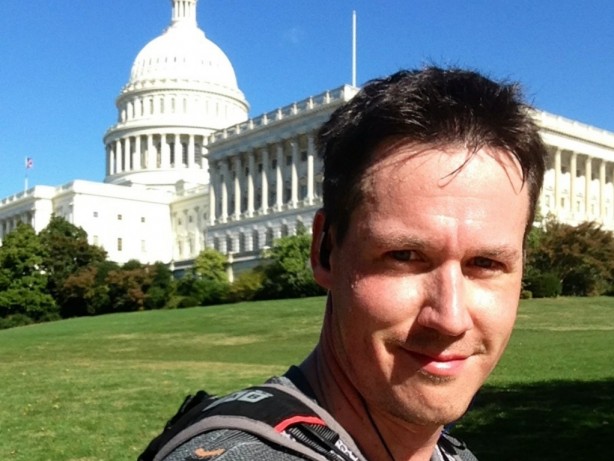
Intercontinental running - November 3rd 2013
A half marathon in Joburg. Have a shower, get on a plane, 16 hours later, get off the plane, run a half marathon in Washington DC. This style of life is becoming the norm and trust me...... more »
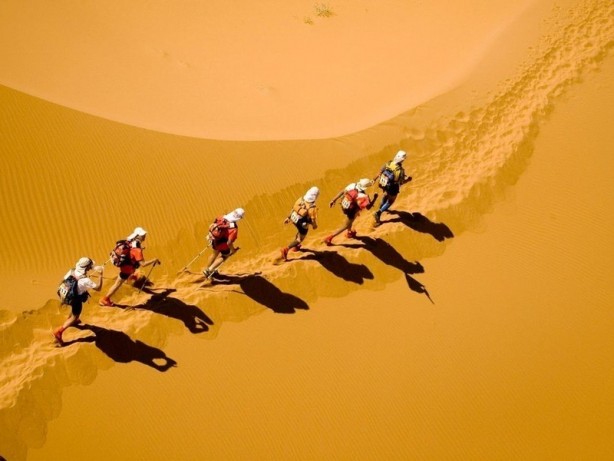
Facing up to the Marathon Des Sables - September 8th 2013
The (other) 'Toughest footrace on Earth', as described by the Discovery Channel. 7 brutal days of running 250km, through soft sand, in temperatures exceeding 50c, whilst carrying about... more »
Altitude, heat and hoodlums - August 25th, 2013
Move aside Thames Path with your variety of interesting historical monuments, your traffic free running lane and your shady tree laden shores. I am moving to Johannesburg, city of gold, hills... more »
Part 2: Cruising to Polaris - April 11th 2013
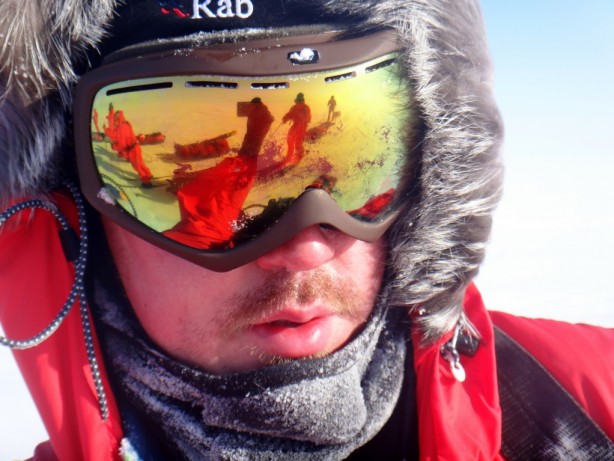
The weather was amazing as we left Resolute for our epic journey ahead. It was ‘only’ about -17c, no wind and beautiful sunshine. For the next few days, we would be pushing forward... more »
Part 1: Journey to the top of the world - April 6th 2013
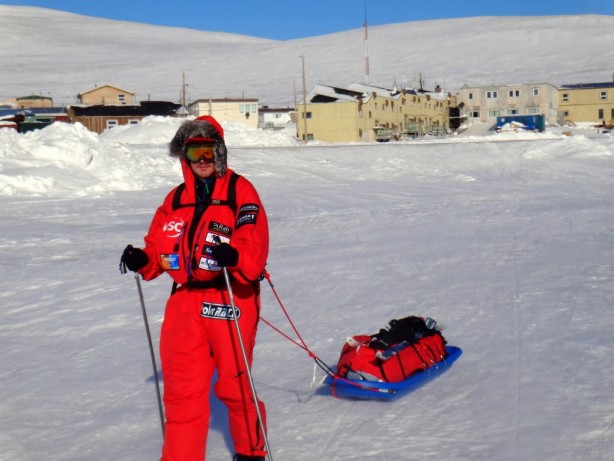
The nostril hairs and my eyelashes started to freeze up – something that has only happened a few times in my life – typically at about -25c. The worst part was that I was still a two... more »

'Adventure is just bad planning' - March 31st 2013
It is with Amundsen's quote that I start my final blog before my own attempt to walk to a pole. Whilst I doubt my effort will be as celebrated, I hope it will be as successful. In the final... more »

Counting Down... - March 13th 2013
100s of KGs of kit, hundreds of individual items, food to be purchased in Canada, guns and ammunition to manage and sponsorship/fundraising efforts to sort out - the lead in to the North Pole is... more »

Success on Aconcagua - February 9th 2013
100kph winds, -40c, deep snow... I had it all in my fight to get to the summit of the highest mountain in the Western and Southern Hemisphere's at 6,962m (22,841ft). Whilst telling everyone... more »
How cold is 'cold'? - January 6th 2013
One of the most common questions people ask me is 'how cold will it be at the North Pole?', to which I normally reply 'could be anything from -25c to -55c... and with windchill,... more »

Maps & Tracking
You can explore the full route to the North Pole and follow Paul’s progress with live maps that will plot his position each day as he progresses towards the pole more >
VSO
VSO is the world’s leading independent international development organisation that works through volunteers to fight poverty in developing countries (www.vso.org.uk). The Fire and Ice Challenge is aiming to raise £50,000 for VSO’s secure livelihoods programme more >